


When buyers start exploring homes in Montgomery County, they often focus on the purchase price and interest rate. But once they see the estimated monthly payment, they may be surprised to find it’s higher than expected. In many cases, property taxes are the reason.
Texas doesn't have a state income tax, which means local services like schools, roads, and emergency services rely heavily on property tax revenue. That makes them a bigger part of your monthly cost than they might be in other states.
The good news is that understanding how property taxes work can make the process much easier and help you know what questions to ask before making an offer.
Your Tax Bill Is Made Up of Several Local Rates
There isn't one single "Montgomery County tax rate." Your bill is a combination of rates from every taxing entity that serves your property. That can include:
- Montgomery County (for fiscal year 2026–27, the county adopted a rate of $0.3860 per $100 of taxable value)
- Your school district, such as Conroe ISD, Magnolia ISD, Willis ISD, or Montgomery ISD
- Your city, if the home is inside city limits
- The Montgomery County Hospital District
- Special districts, like a MUD (more on those below)
Rates are set each year and expressed per $100 of value. You multiply your home's taxable value by the combined rate to get your annual bill. Because the entities change from one neighborhood to the next, two homes at the same price, just a few miles apart, can have noticeably different tax bills.
How Your Home's Value Is Determined
The Montgomery Central Appraisal District (MCAD) appraises properties as of January 1 each year and mails appraisal notices in the spring. Your taxing entities then set their rates later in the year, and bills go out in the fall.
This means the tax amount you see on a listing is usually based on the previous owner's value and exemptions. If the seller had a homestead exemption, an over-65 exemption, or a value that's been capped for years, your bill could look quite different once the home is in your name. It's one of the most common surprises I help buyers plan for.
What Happens with Property Taxes at Closing
In Texas, property taxes are paid in arrears. That means the bill for the current year usually isn't due until the end of the year, and it becomes delinquent if it isn't paid by January 31 of the following year.
So when you close in, say, June, the seller hasn't paid that year's taxes yet. To keep things fair, the standard Texas contract prorates taxes through the closing date. (For a broader look at the steps between contract and keys, see what happens after your offer is accepted.) The seller gives you a credit at closing for their share of the year, and you're responsible for paying the full bill when it comes due. If the current year's tax amount isn't known yet, the proration is based on the prior year's taxes.
How Escrow Works After You Move In
If you have a mortgage, your lender will most likely set up an escrow account. Each month, part of your payment goes into that account, and your lender pays your property taxes (and usually your homeowners insurance) when they're due.
At closing, you'll typically fund the escrow account with a few months of taxes up front. Your lender reviews the account every year, so if your taxes go up, your monthly payment can go up too. If they go down, your payment can come down.
MUDs and Special Districts
If you're shopping in newer neighborhoods around Conroe, Magnolia, Montgomery, or near The Woodlands, you'll likely run into MUDs, or Municipal Utility Districts. A MUD is a local district that funds water, sewer, and drainage infrastructure, often for areas outside city utility service. It pays for that infrastructure partly through its own property tax rate.
A MUD isn't a bad thing. It's a big part of how many of our newer communities were able to grow. But it can add a meaningful amount to your annual bill, and rates vary widely from one district to the next.
Texas law requires sellers to give buyers a written MUD notice that includes the district's tax rate, so you'll see this information before you sign a contract. I always recommend looking at the full combined rate before you fall in love with a house, not just the sales price.
Filing Your Homestead Exemption
If the home will be your primary residence, filing for a homestead exemption is one of the most valuable things you can do after closing. It reduces the portion of your home's value that can be taxed.
Here's what Texas homeowners get from school districts:
- $140,000 general homestead exemption off your home's value for school taxes
- An additional $60,000 if you're 65 or older or have a qualifying disability
Some cities, counties, and other entities offer their own optional homestead exemptions as well.
To put that in perspective: at a hypothetical school tax rate of $0.90 per $100, a $140,000 exemption would save roughly $1,260 a year. Your actual savings depend on your district's rate.
When can you file?
You no longer have to wait until the following January to apply. If you buy after January 1, you can receive a prorated exemption for the rest of that year, as long as the previous owner didn't already claim a homestead exemption on the property for that year.
The general deadline to file is before May 1, and you apply through MCAD using Form 50-114. Your driver's license or state ID will generally need to show the new property address, so it helps to update that soon after you move in.
The 10% homestead cap
Once you have a homestead exemption, the taxable value of your home can't increase more than 10% per year, plus the value of any new improvements. That cap belongs to you, not the house. It doesn't carry over from the seller, and it starts the year after your first year with the exemption.
Buying New Construction? Plan Ahead
New construction is a little different, and it’s worth knowing if you’re touring new home communities in Montgomery. Because the home is appraised as of January 1, a house that was still being built (or was just a lot) on that date may be taxed at a much lower value for that first year.
Your first tax bill might look small, but once the finished home is fully appraised, your taxes and your escrow payment can jump. Ask your lender to estimate escrow based on the completed home's value so you aren't caught off guard by an escrow shortage down the road.
You Can Protest Your Appraisal
If you think MCAD's value for your home is too high, you have the right to protest it. The deadline is generally May 15 or 30 days after your appraisal notice is delivered, whichever is later.
You can start with an informal review with an appraiser, and if that doesn't resolve it, your protest goes to the Appraisal Review Board. Recent comparable sales, photos of needed repairs, or inspection reports can all help support your case. Many Montgomery County homeowners file a protest every year, and it's a normal part of owning a home here.
A Few Questions to Ask Before You Make an Offer
- What is the total combined tax rate for this property?
- Is the home in a MUD or other special district?
- Does the current tax amount reflect exemptions the seller has that I won't have?
- If it is new construction, was the home finished as of January 1?
- What will my estimated escrow payment look like?
Have Questions About Property Taxes on a Home You're Considering?
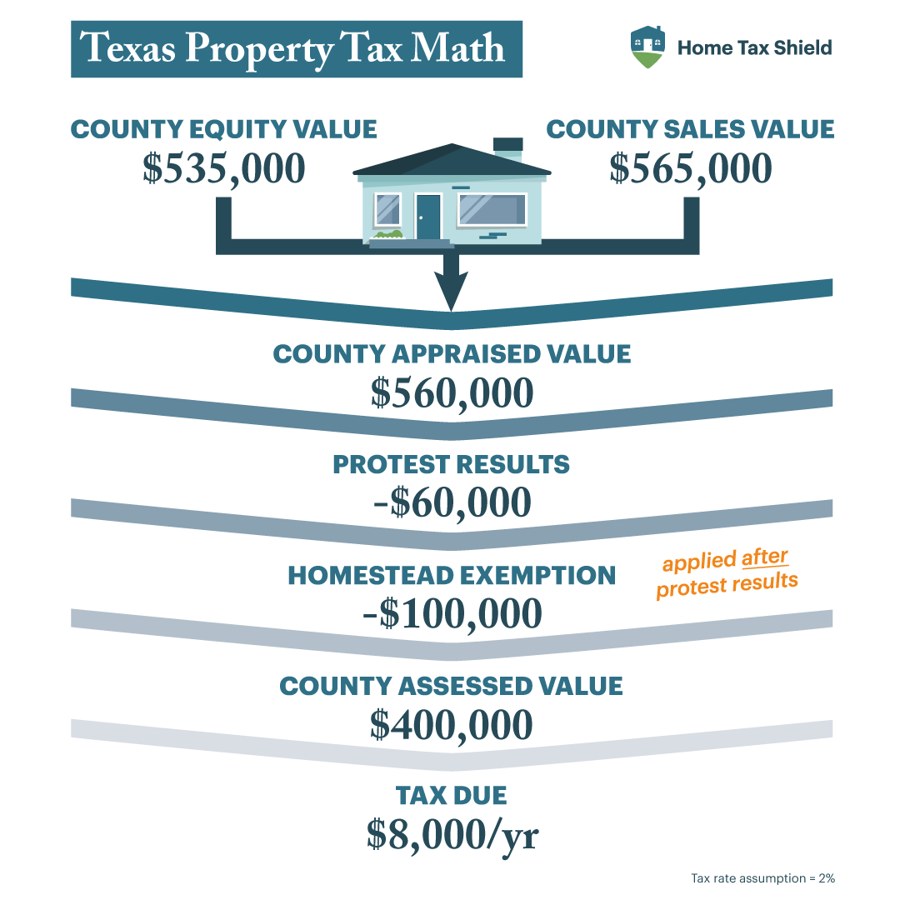
Credit: Home Tax Shield
Property taxes are a big part of what you'll pay each month as a homeowner, and they vary more from neighborhood to neighborhood than most people expect. Understanding them early helps you compare homes on a level playing field and budget with confidence.
If you're looking at homes in Montgomery, Conroe, Willis, Magnolia, The Woodlands, or around Lake Conroe, I'm happy to help you look at the full picture for any home you're considering, including taxes, MUDs, and what your payment might really look like.
Reach out anytime, even if you're just starting to explore.
This post is general information and isn't tax or legal advice. Exemption amounts, tax rates, and deadlines can change, so confirm current details with the Montgomery Central Appraisal District, the Texas Comptroller, or a tax professional.





Leave a Reply